


Criminal Case: The Conspiracy
4.74.16K Reviews
App Specs
- Version
- 2.45.1
- Updated On
- License
- Free
- Downloads
- 5,000,000+
- Developer
- Pretty Simple
- Categories
- Adventure
- Platform
- Android
Screenshots


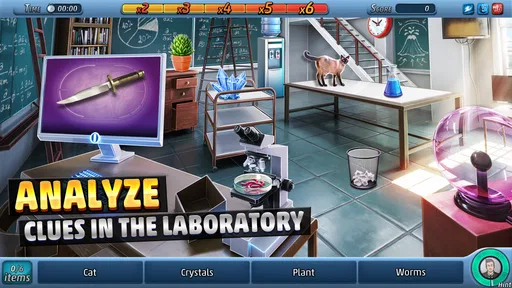
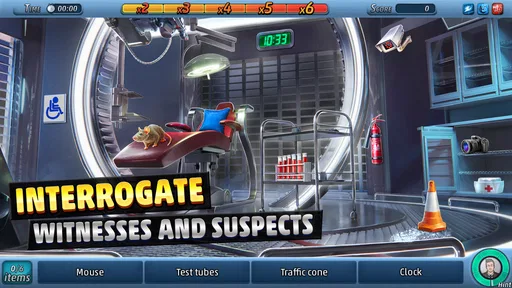
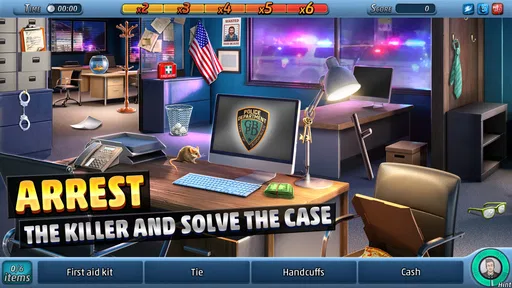
 Analysis by AppCompare
I approached Criminal Case: The Conspiracy as a short-session mystery game rather than as a traditional action adventure. Its central appeal is simple: I investigate murder cases, look for clues, and try to connect what I find into a convincing explanation. That focus gives the game a clear identity, and it also makes its strengths and weaknesses easy to understand. If you enjoy crime stories, hidden-object searches, and gradual case-solving, this is an easy game to try. If you want constant movement, deep free-form investigation, or a story that never pauses for progression limits, you may find it too structured.
The game comes from Pretty Simple and sits in the adventure category. It is free to start, with optional in-app purchases ranging from $0.99 to $99.99 per item. It is aimed at a Teen audience, runs on Android 7.0 or later, and the current version is 2.45.1. Those details matter because this is not a premium, one-time mystery designed to be completed in a single evening. It is built around returning to cases, spending time on investigative tasks, and deciding whether the free route suits your patience.
Investigation is the feature that defines the experience
The most important capability here is the way the game turns a murder investigation into a sequence of focused searches and deductions. Instead of asking me to control a detective through a large open world, it gives each case a series of evidence-driven steps. I examine locations, search for relevant objects, and use the results to move the inquiry forward. The design keeps the main question visible: what happened, and which person is responsible?
That structure works well on a phone because it removes the need to remember a complicated control scheme. I can pick it up when I have a few minutes, inspect a scene, and stop after completing a task. The game does not depend on precise movement or fast reactions. My attention goes toward recognizing useful details and choosing how to spend the resources available for the next part of the investigation.
What makes the capability more meaningful than a basic hidden-object activity is the context around each search. A clue is not just an item to tap; it belongs to a case, a suspect, or a developing theory. I get more satisfaction when I remember why a piece of evidence matters than when I simply clear a picture. The strongest moments come from seeing separate discoveries begin to support or challenge the same explanation.
There is also a useful distinction between finding something and understanding it. A scene may contain many visible objects, but only some are relevant to the current task. That encourages a careful rhythm: scan first, identify the likely evidence, then act rather than tapping randomly. I found that this made the searches feel more like investigation than decoration, even though the underlying interaction remains accessible.
Why the case format suits mobile play
Each case gives the game a natural stopping point. I do not need to reserve a long uninterrupted session to enjoy it, which makes it a practical choice for a commute, a waiting room, or a quiet break. A player who likes mystery fiction but rarely has time for a console-sized adventure can get a recognizable investigative loop without learning a complex interface.
Worth Reading Before You Choose

EA SPORTS FC Mobile 26 Is a Bigger Football Game, but It Takes Time

Flipboard Shows What News Apps Must Do Beyond the Feed

Switching to Android Auto Means Rethinking Your Driving Routine

Google Calendar Makes a Crowded Week Easier to Manage

Ludo King Makes the Most of the Minutes Between Plans

Baby Panda World Brings Quick Play to Modern Phones, but Its Game Library Feels Busy
The same convenience creates a particular kind of suspense. Progress is divided into tasks, so the tension is less about surviving danger and more about wanting to see the next piece of the story. I often found myself thinking, “I will just finish this part,” because the next interview or clue felt close enough to justify another short session. That is a good fit for casual play, but it also means the game feels less dramatic than a fully continuous detective adventure.
The game has attracted a 4.7 average from around 83 thousand ratings, with over 5 million installs. Those figures suggest that its accessible mystery formula has found a substantial audience, but they should not be mistaken for proof that every player will enjoy the pacing. The appeal depends heavily on whether you like repeated searches and gradual progress more than uninterrupted narrative exploration.
How I work through a case in practice
When I begin an investigation, I treat the first search as an information-gathering stage rather than a race. I look across the whole scene before tapping. This small habit helps because the visual design can make several objects look equally important, while the current objective usually points toward a narrower group of clues. Taking a moment to orient myself reduces careless taps and makes the result feel earned.
After gathering evidence, I pay attention to how the case frames people connected to the crime. The useful question is not only who appears suspicious, but also whether the available evidence supports that suspicion. The game is most enjoyable when I resist choosing a culprit based only on personality or presentation. Following the trail instead of guessing early gives the later developments more weight.
One practical tip is to avoid treating every available action as equally urgent. I found it more efficient to focus on the task that directly advances the current investigation. Optional activity can be tempting, but if my goal is to see the next story beat, spreading attention across every possibility can make the session feel slower. This is especially useful when I am playing in short bursts and want each visit to produce visible progress.
Another useful approach is to play when I can give the screen a little attention. The controls are simple, but rushed play makes the search scenes less enjoyable and increases the chance that I will tap without really observing. This is not a game I would choose while distracted by a conversation or trying to multitask. Its challenge is visual concentration, not reflexes.
What the progression feels like
The progression is deliberately measured. The game wants me to return to the investigation, complete activities, and gradually uncover more of the case. That pacing can create anticipation, particularly when a suspect has just been introduced or a new clue changes the direction of the inquiry. It can also feel repetitive if I prefer a mystery to move from discovery to conclusion without pauses.
This is where the free-to-play structure becomes part of the practical experience. I can begin without paying, but optional purchases are present, and the temptation to speed up progress may be stronger when I am invested in a case. I recommend deciding in advance whether I am comfortable waiting and playing at the intended pace. That personal rule makes the game easier to enjoy because I am less likely to treat every delay as a problem that needs a purchase.
For younger players, the Teen content rating is worth taking seriously. The setting revolves around murder investigations, so the tone is more serious than a harmless matching game or a light cartoon puzzle. I would choose it for an older teenager who is comfortable with crime fiction, while younger children would be better served by a gentler adventure.
The best everyday scenario for this game
The clearest use case is a player who wants a mystery to fill several small breaks throughout the day. Imagine having a short lunch break: I can open a case, search a location, review the evidence, and stop before returning to work. Later, I can continue without needing to reconstruct a complicated control layout or remember a huge amount of map navigation. The case structure makes that fragmented style feel natural.
It also works for someone who enjoys discussing theories with friends. I can pause after a new clue, form an opinion about a suspect, and return later to see whether the investigation supports it. The game does not need to be played in one sitting to create that feeling of an ongoing serial mystery. In my experience, the most satisfying sessions were not the longest ones; they were the sessions where I completed a meaningful investigative step and had a clear question waiting for the next visit.
A less obvious strength is that the game can serve as a gentle introduction to adventure games. Someone who finds traditional point-and-click adventures intimidating may appreciate the focused objectives and straightforward interactions. There is less pressure to master an inventory system or explore a complicated environment. The trade-off is that experienced adventure players may miss the freedom to combine items, question the world in unexpected ways, or solve puzzles through unconventional experimentation.
I would not choose it as my main game during a long flight or an evening when I want a large, uninterrupted experience. The repeated task structure is better at creating a dependable routine than at delivering a single powerful dramatic arc. For that kind of session, a premium narrative adventure with more continuous exploration would probably be a better match.
Where the trade-offs become noticeable
The first limitation is repetition. Searching scenes, gathering evidence, and moving through case steps is the point of the game, but that loop can lose its freshness if I play for too long in one sitting. I get more from it when I treat it as a recurring mystery habit rather than trying to consume everything immediately.
The second limitation is the tension between curiosity and pacing. When a case has caught my attention, I naturally want the next development right away. The free structure may ask me to wait, repeat activities, or consider an optional purchase. That does not make the game unfair by itself, but it changes how I experience the story. Players who dislike any interruption between narrative moments should be cautious before committing time to it.
There is also a difference between accessible investigation and deep investigation. The game gives me a guided route through the evidence, which keeps the experience approachable. However, it does not replace a detective simulation where I can freely decide which lead to pursue, make serious procedural mistakes, or build a completely personal theory from a large evidence board. Its mystery is curated, not open-ended.
Compared with a conventional hidden-object game, this title has a stronger reason for each search because the scenes belong to murder cases and the findings feed a continuing investigation. Compared with a story-heavy adventure, it offers easier mobile sessions but less freedom and less uninterrupted immersion. Compared with a premium game, the free entry is inviting, while the optional purchases and measured progression require more patience.
My practical recommendation is to disable impulse spending by setting a personal limit before starting. I would also avoid judging the entire game from one quick session. The central loop becomes clearer after I have completed enough investigative steps to see how the evidence and suspects connect. At the same time, if the first few searches already feel like work rather than entertainment, more time is unlikely to change the basic style.
Who should skip it
I would skip this game if I want realistic police procedure, complex interrogation systems, or a completely free investigation. I would also look elsewhere if I dislike hidden-object scenes, because that element is not a side activity that can be ignored. Players who want fast combat or constant exploration will probably find the experience too static.
I would be cautious if I am especially sensitive to free-to-play pacing. The fact that the game is free makes it easy to test, but the long-term experience depends on my willingness to accept its rhythm. A player who is comfortable with gradual progress can enjoy the ongoing cases; a player who wants to pay once and remove all friction may prefer a premium alternative from the start.
Who gets the most from the investigation loop
The best audience is someone who enjoys crime stories, visual searches, and short but repeatable sessions. I think it is particularly suitable for casual players who want a clear objective every time they open a game. The Teen rating also makes it more appropriate for older players who are comfortable with murder-themed fiction rather than for children looking for a simple family adventure.
It is also a good choice for people who like making predictions without needing difficult puzzles. The game gives enough structure to keep the story moving, while still letting me pay attention to clues and question the apparent explanation. That balance is more welcoming than a demanding detective game, even if it will not satisfy players looking for total control over the investigation.
The current version, 2.45.1, supports the impression of an established game rather than a brief experiment, and Pretty Simple has built the experience around a recognizable case-solving format. I would still approach it as an ongoing mobile game, not as a compact book that I can finish in one concentrated sitting. That expectation makes the free model and the gradual progression easier to evaluate fairly.
After spending time with it, my view is straightforward: this is a convenient, approachable murder-mystery game whose strongest feature is its focused investigation loop. I like being able to examine a scene, connect evidence to a case, and return later without losing the thread. I like it less when the same rhythm begins to feel like a checklist or when my curiosity runs ahead of the progression.
My recommendation is to try it if you want a structured crime adventure for short sessions and can accept a patient free-to-play pace. Start slowly, observe scenes instead of tapping randomly, and decide early whether the story is worth continuing on the free route. For the right player, that combination turns small pockets of spare time into a satisfying investigation. For anyone seeking a deep, uninterrupted detective adventure, another category of game will be a better fit.
Pros
- Engaging hidden-object investigations with varied crime-scene challenges.
- Episodic cases provide a clear sense of progression and discovery.
- Stylized comic-book visuals make the investigation feel distinctive.
- Short levels suit quick play sessions on mobile devices.
- Social features can add motivation for players who enjoy comparing progress.
Cons
- Energy limits can interrupt investigations and encourage waiting between cases.
- Some clues and upgrades may require repeated play or in-app purchases.
- Dialogue and story twists can feel predictable for experienced mystery fans.
- Frequent taps and searches may become repetitive over longer sessions.
- An internet connection may be needed for certain features and progress syncing.
FAQs for Criminal Case: The Conspiracy
What is Criminal Case: The Conspiracy about?
Criminal Case: The Conspiracy is a hidden-object investigation game in which you join a police team and work through murder cases. You examine crime scenes, search for clues, question suspects, analyze evidence, and gradually uncover the truth. The game combines story-driven episodes with puzzle-like object searches, making it suitable for players who enjoy casual detective adventures rather than fast-paced action.
Is Criminal Case: The Conspiracy free to download and play?
Yes, Criminal Case: The Conspiracy can generally be downloaded and played for free, but it includes optional in-app purchases. These purchases may provide additional energy, hints, or other conveniences that help you progress more quickly. You can play without spending money, although waiting for energy to refill and repeating scenes to earn stars may make progress slower during longer play sessions.
Does the game require an internet connection?
An internet connection may be needed for important features, including loading episodes, synchronizing progress, displaying advertisements, and processing in-app purchases. While some previously loaded content may remain accessible temporarily, the game is not designed as a fully offline experience. For the smoothest performance, it is best to play while connected to a stable Wi-Fi or mobile data network.
Is Criminal Case: The Conspiracy suitable for children?
The game is presented in a cartoon-style format, but its stories involve murders, crime scenes, investigations, suspects, and references to violence. It is therefore better suited to older children, teenagers, and adults, depending on individual sensitivity. Parents should check the current age rating in their region and review the in-app purchase and advertising settings before allowing younger players to use it.
How does gameplay and progression work?
Progression is based mainly on completing hidden-object scenes, earning stars, and using those stars to perform investigations such as analyzing evidence or interrogating characters. You move through a sequence of cases, with new locations and story developments unlocked as you advance. Energy limits how frequently you can play, while optional hints and purchases can reduce frustration when scenes become difficult.


